Introduction: The “Wrapper” Era is Officially Over
If you look back at the digital landscape of the GCC, the demand for Sovereign AI infrastructure Dubai and Riyadh enterprises are asking for has exploded. The last two years were about experimentation, but 2026 is about ownership., it was defined by a single, electrifying word: Experimentation.
Every boardroom from the Dubai International Financial Centre (DIFC) to the King Abdullah Financial District (KAFD) was buzzing with “Proof of Concepts.” We saw a frantic rush to integrate public chatbots, wrap generic APIs, and see just how fast we could inject Generative AI into our workflows. It was a necessary phase of discovery. We needed to touch the fire to understand its heat.
But as we stand here in December 2025, looking squarely at the roadmap for 2026, the mood has shifted. The novelty of “chatting with a bot” has worn off. A harder, more strategic reality has settled in.
The question for 2026 is no longer, “Can AI do this?” The question is now, “Can AI do this securely, on our own infrastructure, without a single byte of data leaving the country?”
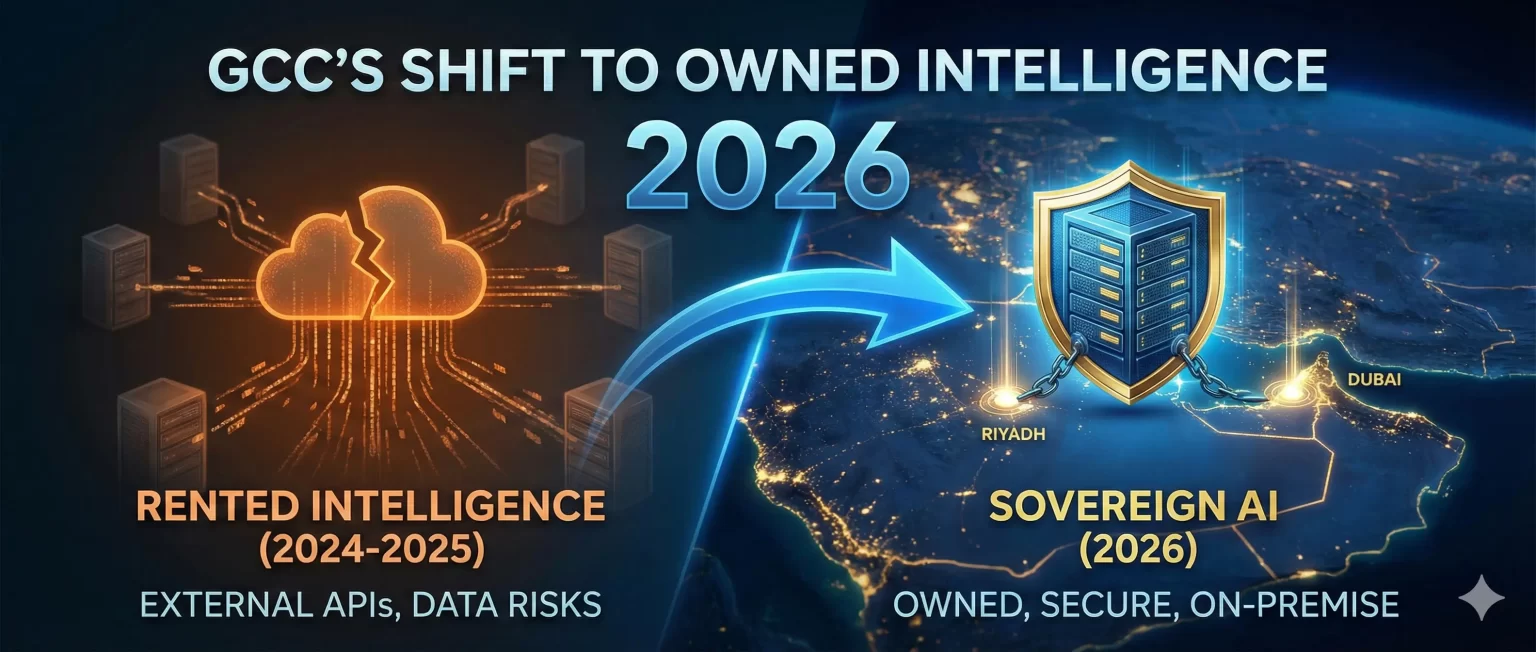
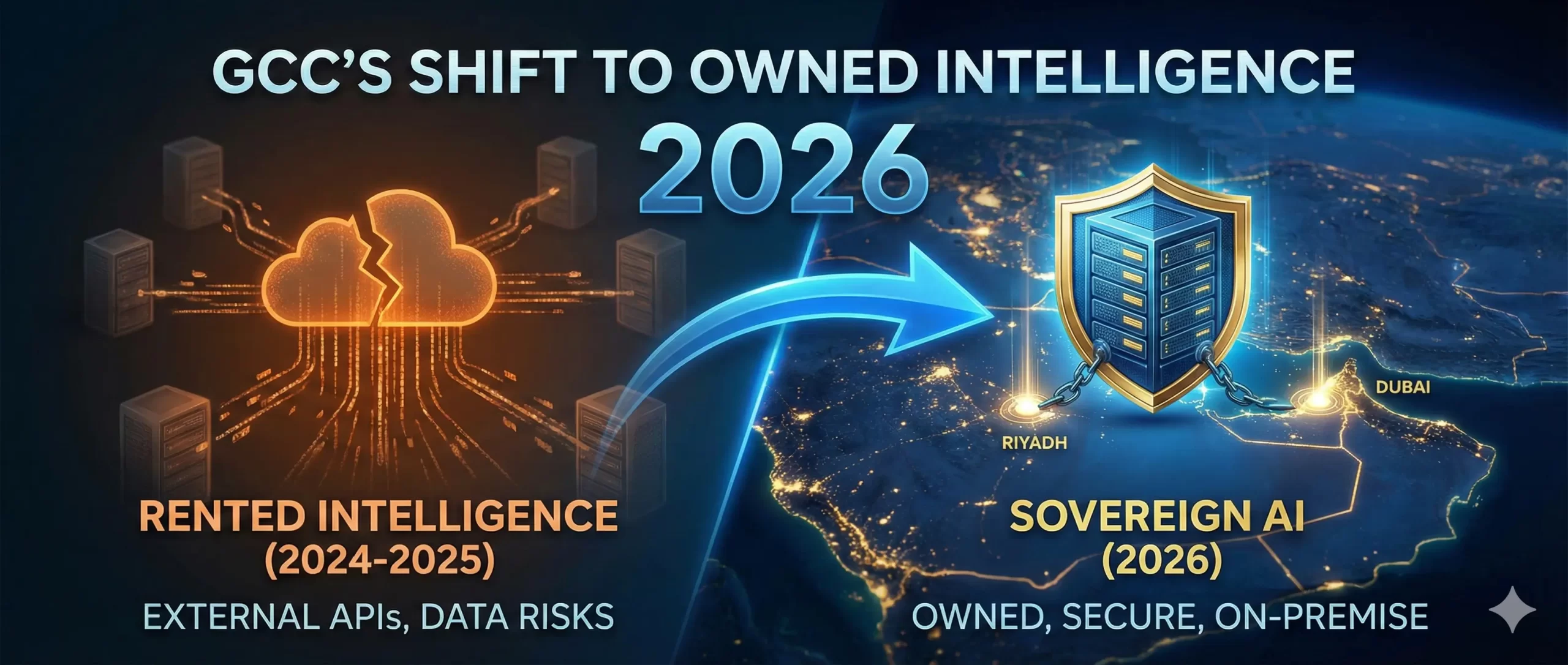
We are witnessing the end of the “Rented Intelligence” era and the beginning of the Sovereign AI infrastructure Dubai and Riyadh have been waiting for. For the nations of the Gulf Cooperation Council, 2026 is not about adopting AI; it is about institutionalizing it. And that requires a fundamental shift in infrastructure
The “Rented Intelligence” Trap
For the past two years, most enterprises have essentially been “renting” their cognitive capabilities. When a bank in Riyadh or a hospital in Abu Dhabi relies solely on public models hosted on servers in Oregon or Frankfurt, they are building their digital future on rented land.
While convenient, this “API-wrapper” approach is colliding with three critical realities as we enter 2026:
1. The “Black Box” Liability
In a regulated, post-2025 world, “we don’t know why the AI said that” is no longer an acceptable answer during an audit. When you rent a model via an API, you cannot inspect the weights. You cannot guarantee that your proprietary IP isn’t being used to train the next version of a public model that your competitors will use. If your AI hallucinates and causes financial damage, you have no audit trail to prove why.
2. The Latency of Geography
Dubai’s D33 Agenda calls for an “AI-Enabled State.” That implies real-time decision-making in smart cities, logistics, and energy grids. You cannot build real-time critical infrastructure if your intelligence depends on the latency and uptime of a server farm 8,000 miles away. If the undersea cable slows down, your business intelligence shouldn’t have to slow down with it.
3. The Corporate Firewall is Dead (If You Use APIs)
Enterprise security used to be about keeping bad actors out. In the AI era, it’s about keeping your data in. Every time you send a prompt to a public model, that data leaves your perimeter. For sectors like Defense, Healthcare, and Finance, this is a non-starter.
The Regulatory Firewall: Why Compliance is Driving Sovereignty
The biggest driver for the shift to Sovereign AI in 2026 isn’t just technology; it is the law. The legal landscape in the GCC has matured rapidly, creating a “Regulatory Firewall” that makes public APIs risky for enterprise use.
Saudi Arabia: The NDAMO Mandate
In the Kingdom of Saudi Arabia, the National Data Management Office (NDAMO) has established strict governance frameworks.
- Data Sovereignty: Critical national data (which often includes data from government contractors, energy sectors, and healthcare) generally must be stored and processed within the Kingdom’s borders.
- The Cost of Non-Compliance: Penalties for mishandling sensitive data can reach up to 3 Million SAR (approx. $800,000 USD), not to mention the reputational damage.
- The Implication: If your AI solution relies on sending customer data to an API hosted in the US, you are likely navigating a compliance minefield. This is why we specifically engineer NDAMO compliant AI solutions that ensure data never leaves the Kingdom.
UAE: The Personal Data Protection Law (PDPL)
The UAE’s Federal Decree-Law No. 45 of 2021 (PDPL) places stringent controls on cross-border data transfer.
- Consent & Transfer: Transferring personal data to a country that does not have an “adequate level of protection” (as defined by the UAE Data Office) requires specific derogations.
- The Implication: For UAE enterprises, managing AI Data Residency UAE requirements means “On-Premise” or “Local Cloud” isn’t just a tech preference; it is the safest legal posture to adopt.
The 2026 Mandate for Sovereign AI Infrastructure Dubai

So, what does the pivot to 2026 look like?
It looks like Sovereign AI.
Sovereign AI means moving away from generic, one-size-fits-all models and building AI infrastructure that you own, control, and host. It is the transition from consuming intelligence as a service (SaaS) to deploying intelligence as infrastructure (IaaI).
This requires more than just a “Python script.” It requires a fusion of AI/ML development, DevOps security, and MLOps lifecycle management.
Technical Deep Dive: How Unanimous Tech Architects Your Sovereign Future
At Unanimous Technologies, we don’t just build apps; we build the Sovereign AI infrastructure Dubai needs to meet D33 goals.. We help GCC enterprises deploy “Local Brains.” Here is how our technical capabilities deliver the Sovereign AI you need for 2026.
1. The Models: Local Heroes vs. Global Standards
Sovereign AI starts with the model itself. You cannot achieve sovereignty with a closed-source API. We specialize in the selection and deployment of Open-Weights models:
- The “Local Hero” (Falcon 180B): We specialize in On-Premise Falcon LLM Deployment. Developed right here in the UAE by the Technology Innovation Institute (TII), Falcon 180B is one of the world’s most powerful open models. It is a beast of a model, requiring significant compute, but it offers true sovereignty. We optimize it for enterprise deployment.
- The Agile Standard (Llama 3): For businesses needing speed and efficiency, Meta’s Llama 3 (70B and 8B versions) offers incredible reasoning capabilities. We bring these models inside your firewall, ensuring Meta never sees your data.
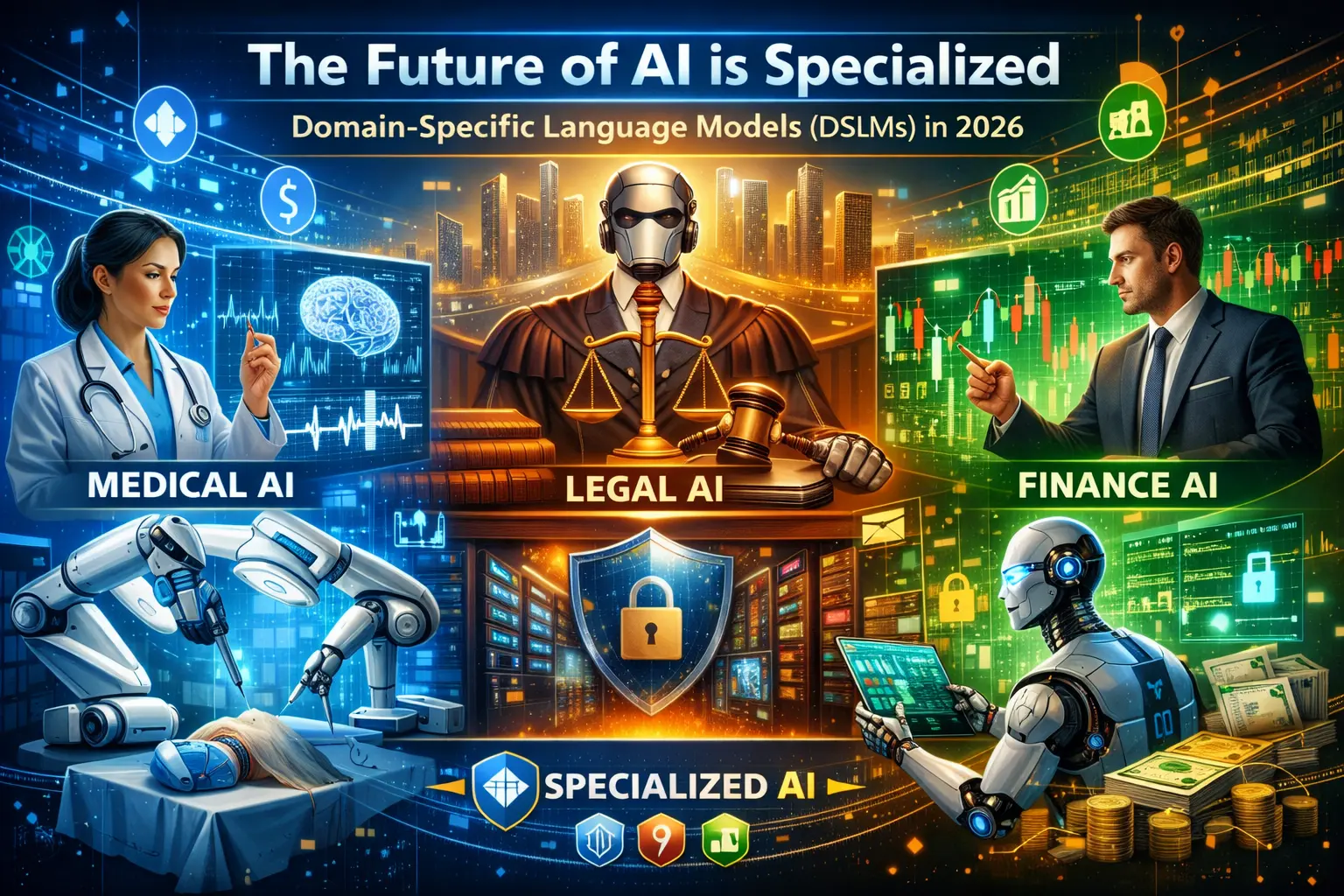
- Fine-Tuning (PEFT/LoRA): A generic model doesn’t understand UAE Labor Law or Saudi Fintech regulations. We use Parameter-Efficient Fine-Tuning (PEFT) to train these models on your proprietary data (PDFs, SQL databases, internal wikis), creating a model that is an expert in your business.
2. DevOps: The Secure Perimeter
Deploying a Large Language Model (LLM) is not like deploying a website. It requires massive compute resources (GPU Clusters) and distinct security protocols.
- Containerization (Docker/Kubernetes): We containerize your AI agents, ensuring they run seamlessly on your on-premise servers or private cloud instances (like AWS Outposts or local GCC cloud providers).
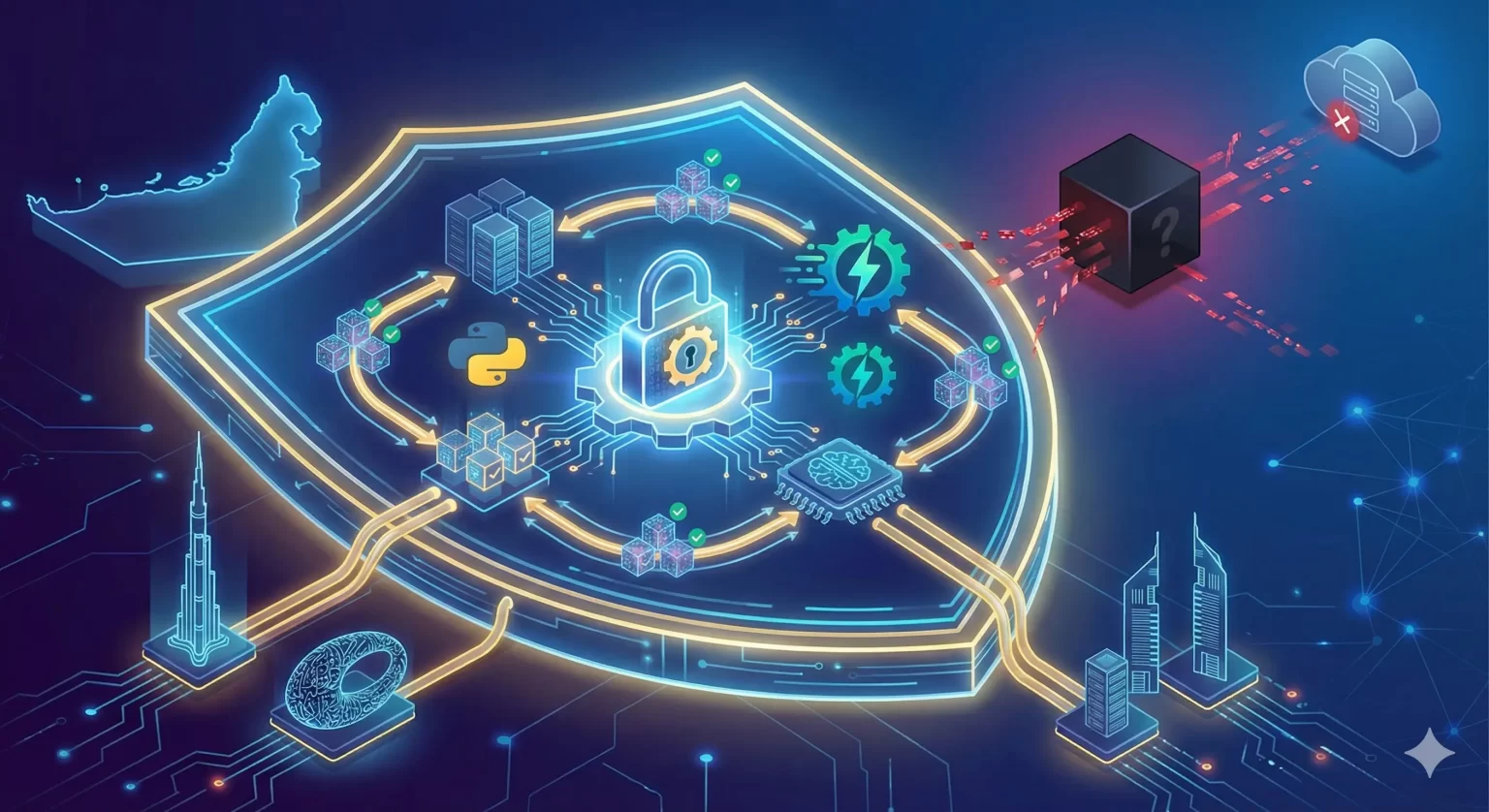
- Air-Gapped Deployments: For our most sensitive government and defense clients, we architect fully air-gapped environments. This means the AI server has literally zero physical connection to the public internet. It is an island of intelligence, completely immune to external cyberattacks.
- IAM Integration: We integrate the AI directly with your enterprise Identity and Access Management (IAM). If a Junior Associate isn’t allowed to see a confidential “Merger & Acquisition” file, the AI agent won’t summarize it for them. Security is baked into the logic.
3. MLOps & AgentOps: The Brain that Doesn’t Decay
This is the piece most agencies miss. An AI model is not a static piece of code; it is a living system. Without Machine Learning Operations (MLOps), a model’s performance degrades over time (a phenomenon known as “model drift”).
- Continuous Training Pipelines: We build automated pipelines that allow your Sovereign AI to learn from new data daily. As your business generates new reports, the model updates its knowledge base within your secure environment.
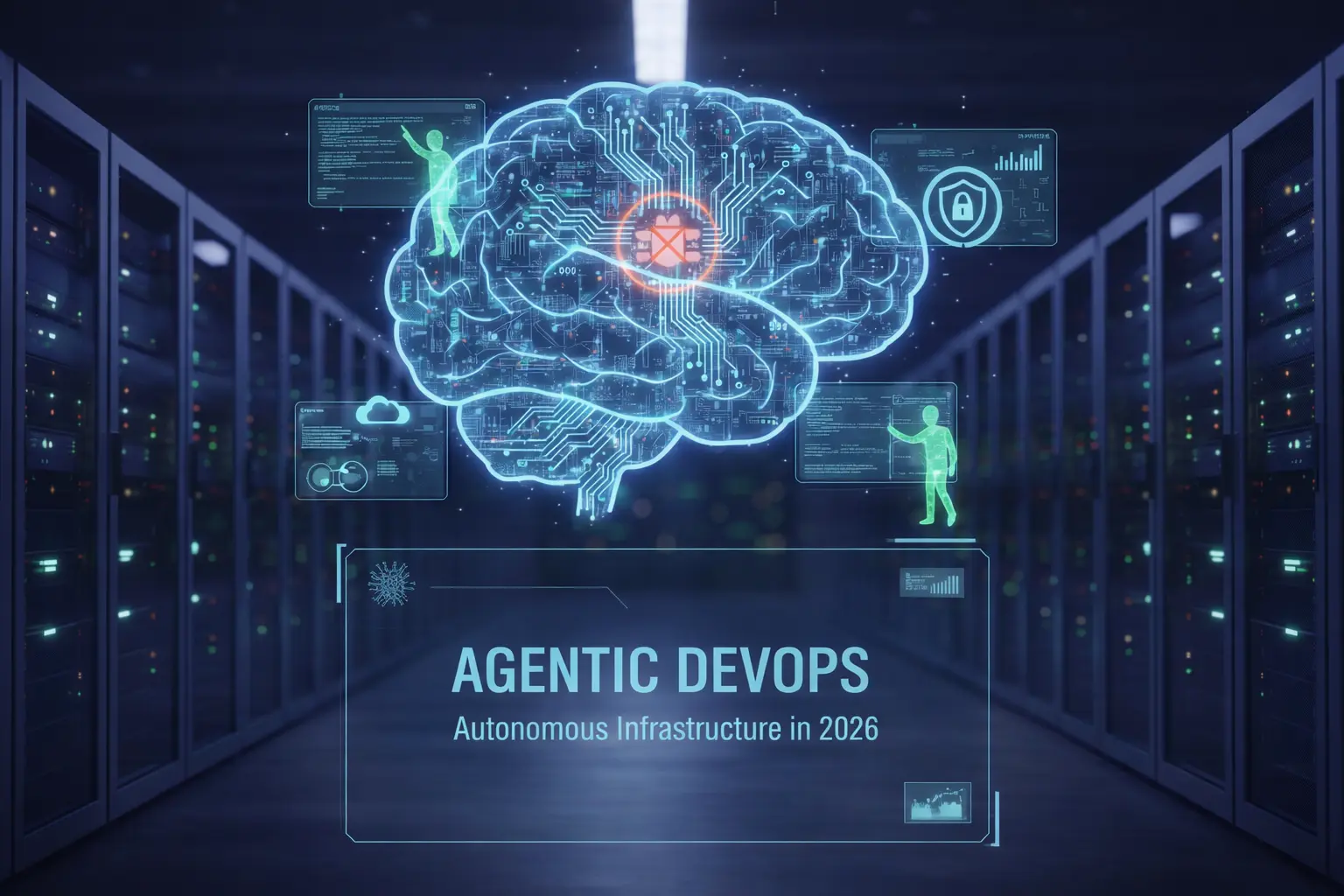
- Agent-Ops for 2026: As we move toward Enterprise Agentic AI, we implement specific monitoring to ensure your autonomous agents don’t go rogue.
- Data Lineage: We create an audit trail, allowing you to trace exactly which document led the AI to a specific conclusion—a requirement for compliance in 2026.
The “Agentic” Shift: Moving from Chat to Action
Why is this infrastructure so critical for 2026? Because the market is moving toward Agentic AI.
In 2024, we used AI to write emails. In 2026, we will use AI to send them, book the meetings, update the CRM, and trigger invoices.
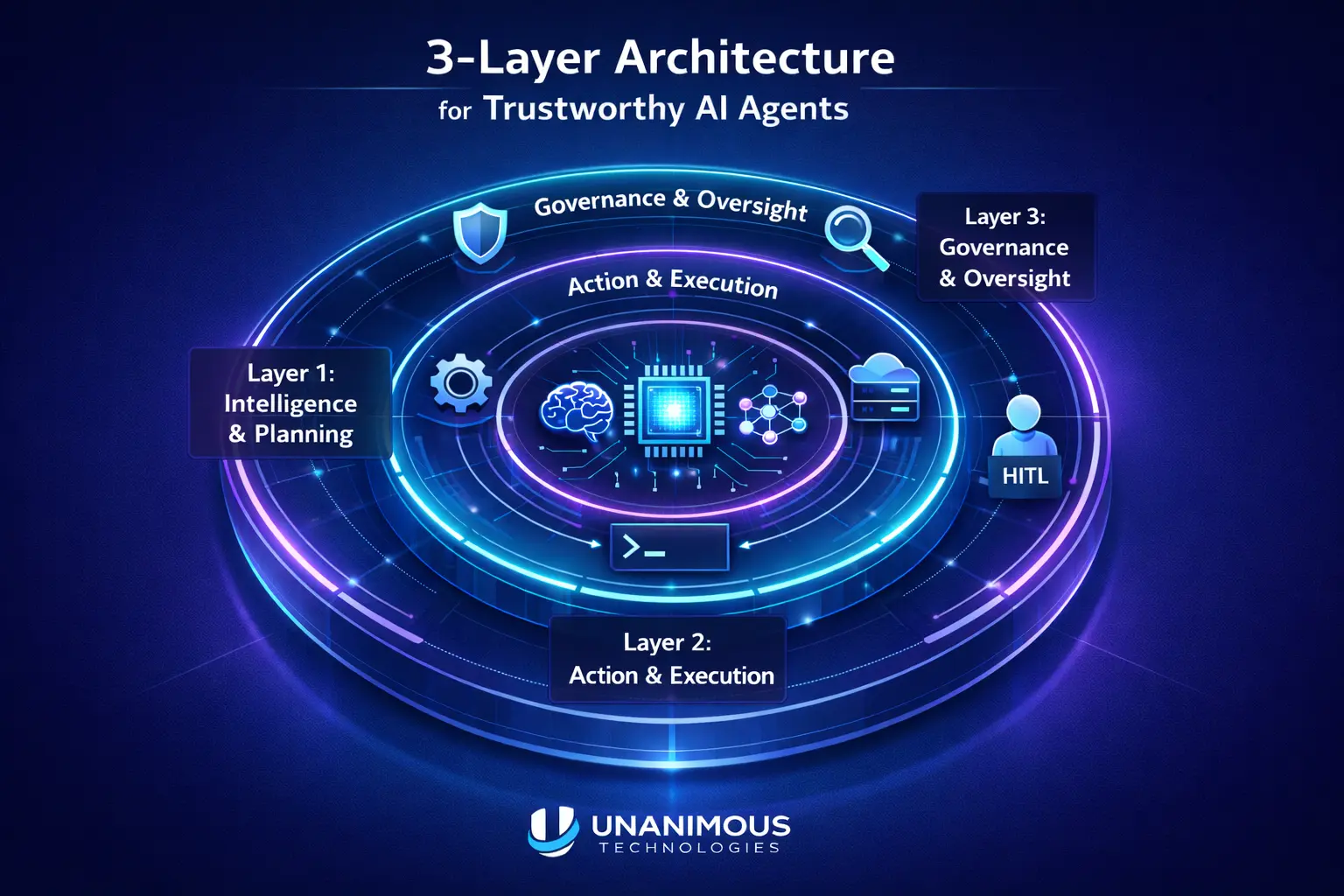
This is “Agency.” When you grant an AI the power to take action in your systems, you cannot risk that AI being a “black box” hosted on a shared server. You need total control over its logic and permissions.
Unanimous Tech builds the “Safe Sandbox” environments where these agents operate. By combining DevOps security with MLOps monitoring, we ensure that your autonomous agents operate efficiently without hallucinating or overstepping their boundaries.
The Economic Argument: CapEx vs. OpEx
Many CFOs ask us: “Isn’t building on-premise infrastructure expensive?”
It is true that the upfront Capital Expenditure (CapEx) of buying GPUs or reserving private cloud instances is higher than a $20/month subscription. But the long-term economics of 2026 tell a different story:
- Cost Predictability: With public APIs, your costs scale linearly with usage. If your customer base doubles, your AI bill doubles. With Sovereign AI, you own the compute. The marginal cost of the next 1,000 queries is near zero.
- Asset Creation: When you fine-tune a model on your data, you are building a proprietary intelligence asset that adds valuation to your company. Renting an API adds no asset value; it is just a utility cost.
- Risk Mitigation: The cost of a single data breach or regulatory fine in the GCC significantly outweighs the cost of secure infrastructure. Sovereignty is an insurance policy.
Conclusion: The Choice is Yours
The “Wild West” days of AI are behind us. 2026 demands maturity, security, and sovereignty.
The organizations that will lead the market next year won’t be the ones with the flashiest chatbots—they will be the ones who had the foresight to bring their intelligence in-house. They will be the ones who realized that in the Middle East, data isn’t just an asset—it’s national wealth.
At Unanimous Technologies, we are ready to help you make that transition. We have the AI researchers, the DevOps engineers, and the MLOps architects to build your fortress of intelligence.
Don’t just use AI. Own it. Ready to Secure Your Infrastructure?
AI Services | Contact Our Strategy Team | Visit Unanimous Tech Home