Agile vs DevOps is the cornerstone of modern engineering at Unanimous Technologies. As a company dedicated to pushing the boundaries of DevOps and AI, we recognize that the “speed-to-market” race in 2026 isn’t won by choosing one methodology over the other. Instead, it is won by those who can seamlessly integrate the iterative flexibility of Agile with the robust automation of DevOps.
In this definitive guide, we explore the nuances of the Agile vs DevOps landscape, how they have evolved with AI integration, and which approach—or combination—will drive the most value for your business infrastructure.
1. The Genesis of the Methodology Evolution
To understand the Agile vs DevOps dynamic, we must look at the “Software Crisis” that preceded them. Before 2001, the “Waterfall” model reigned supreme. It was linear, slow, and heavily documented. Requirements were gathered for six months, development took a year, and testing happened at the very end. By the time the software reached the user, the market had usually moved on.
The Rise of Agile
The Agile Manifesto of 2001 introduced a shift in thinking: Individuals and interactions over processes and tools, and working software over comprehensive documentation. Agile solved the “Product Gap”—the distance between what the business thought it wanted and what the developers actually built. By working in small increments (Sprints), teams could pivot weekly based on stakeholder feedback.
The Rise of DevOps
While Agile fixed the relationship between the Business and the Developer, it ignored the relationship between the Developer and the Operations team. This created a new bottleneck. Developers were incentivized to ship code quickly (Agile), while Operations was incentivized to keep the system stable (which often meant avoiding changes).
DevOps emerged to break this “Wall of Confusion.” It applied Agile-like principles to infrastructure and deployment, advocating for automation, shared responsibility, and a “Shift-Left” mentality where testing and security happen as early as possible.
2. Deep Dive: The Agile Frameworks
When we talk about Agile vs DevOps, we are often talking about how we manage people and tasks. At Unanimous Technologies, we frequently utilize Scrum and Kanban to maintain high-velocity output.
Scrum: The Structured Iteration
Scrum is the most popular Agile framework. It utilizes roles like the “Scrum Master” and “Product Owner” to manage a “Backlog” of tasks.
- Sprints: Fixed-length cycles (usually 2 weeks).
- Daily Standups: 15-minute syncs to identify blockers.
- Retrospectives: A dedicated time to look back and improve the next cycle.
Kanban: The Continuous Flow
Unlike Scrum, Kanban doesn’t have fixed-length sprints. Instead, it focuses on “Work in Progress” (WIP) limits. A Kanban board visualizes the flow of tasks from “To Do” to “Done.” It is ideal for teams with high volumes of incoming requests that vary in size and urgency, such as a DevOps support desk.
3. Deep Dive: The DevOps Pillars
DevOps is less about “meetings” and more about “automation.” It is the technical backbone that allows Agile teams to actually ship their code.
The CI/CD Pipeline
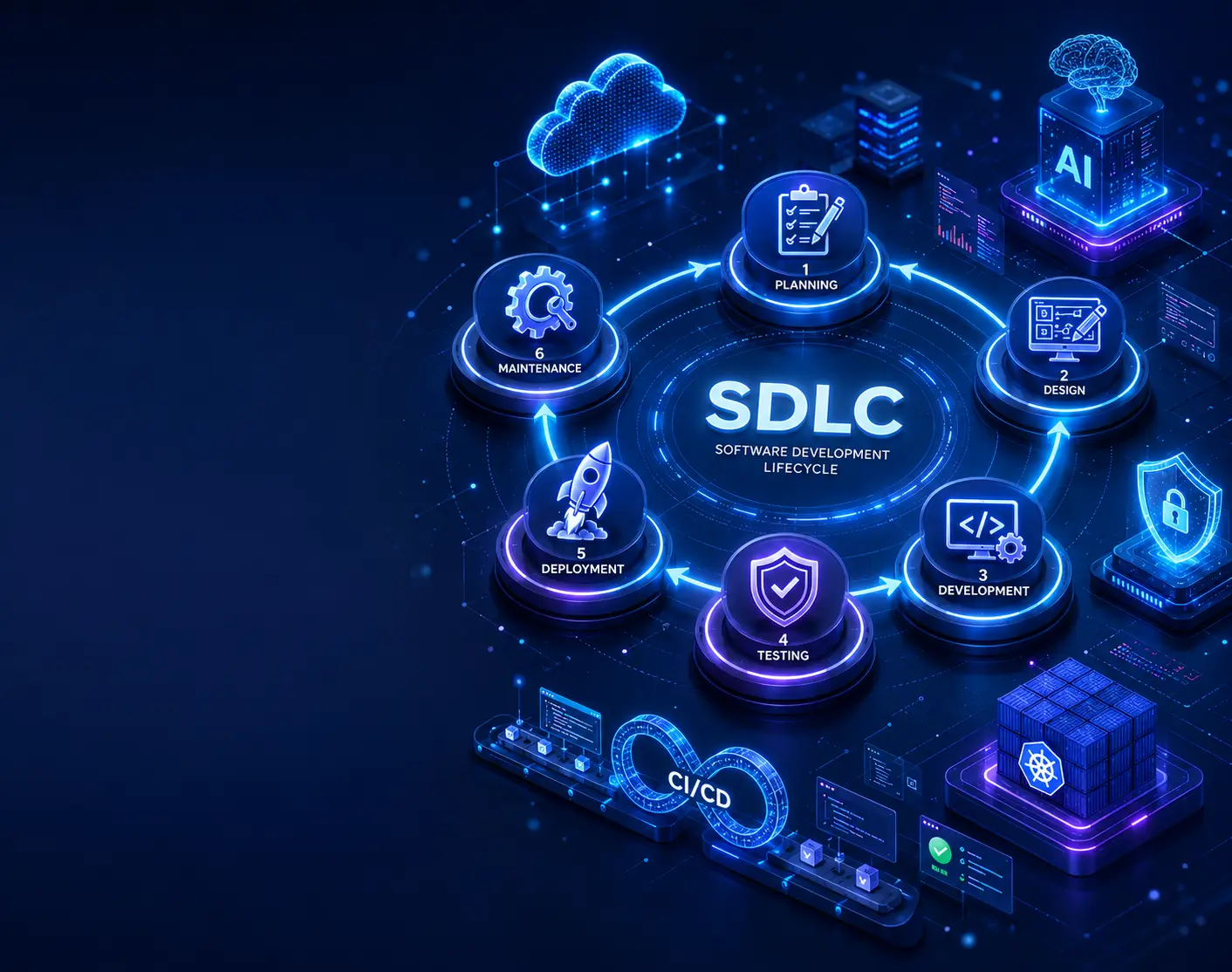
Continuous Integration (CI) and Continuous Deployment (CD) are the heart of DevOps.
- CI: Developers merge code into a central repository several times a day. Automated builds and tests run immediately to catch bugs.
- CD: The code is automatically deployed to testing or production environments if it passes the CI phase.
Infrastructure as Code (IaC)
In the Agile vs DevOps context, DevOps brings the rigor of software development to hardware. Instead of manually configuring servers, DevOps engineers write code (using tools like Terraform or Ansible) to define the environment. This ensures that the production environment is an exact replica of the testing environment, eliminating the “it works on my machine” syndrome.
4. Direct Comparison: Agile vs DevOps
| Feature | Agile Methodology | DevOps Methodology |
| Primary Philosophy | Iterative development and feedback. | Integration and automation. |
| Target Audience | Developers and Product Owners. | Developers and IT Operations. |
| Key Objectives | Manage changing requirements. | Rapid, stable delivery of code. |
| Tools | Jira, Trello, Asana. | Docker, Jenkins, Kubernetes, AWS. |
| Feedback Loop | Customer/Stakeholder reviews. | Automated telemetry and monitoring. |
| Documentation | Low (Working code > Docs). | High (Automated scripts/logs). |
5. Why the “Versus” is a Myth
The reality of Agile vs DevOps in 2026 is that they are two sides of the same coin. You cannot truly be “Agile” if your deployment process takes three weeks of manual approvals. Similarly, you cannot have a great “DevOps” culture if your product team is building features that no one wants.
How they Complement Each Other:
- Agile handles the “What”: What does the user need? What should we build next?
- DevOps handles the “How”: How do we get this to the user without breaking the system?
At Unanimous Technologies, we view DevOps as the logical conclusion of Agile. If you want to be agile, you must automate. If you want to automate effectively, you must have a clear, agile plan.
6. Which Approach Works Best for You?
Choosing between Agile vs DevOps depends on your current organizational pain points.
Scenario A: The Communication Breakdown
- Symptoms: The dev team builds features, but the clients hate them. The project is always over budget.
- Solution: Focus on Agile. You need better backlog grooming, more frequent demos, and closer alignment with the business.
Scenario B: The Deployment Nightmare
- Symptoms: The code is “done” on Friday, but it takes until next Thursday to go live. Deployments often crash the site.
- Solution: Focus on DevOps. You need to automate your testing, invest in containerization, and implement CI/CD.
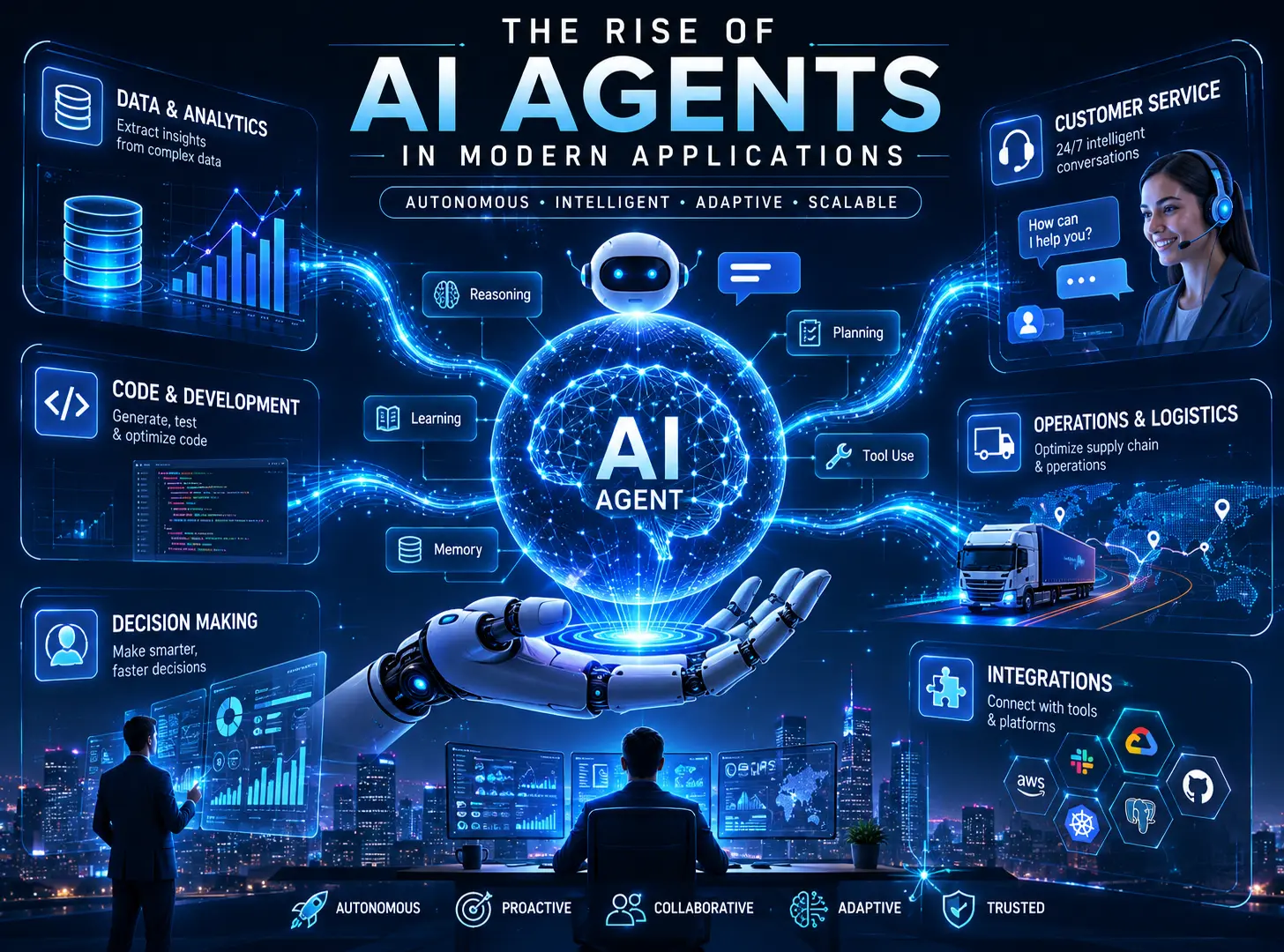
7. The Role of AI in 2026 (AIOps and AI-Agile)
As an AI-focused firm, Unanimous Technologies stays at the forefront of how machine learning impacts the Agile vs DevOps debate.
AI in Agile
Generative AI tools now help Product Owners write user stories and acceptance criteria. AI-driven project management tools can analyze past sprint data to predict exactly how much work a team can realistically handle, effectively ending the “over-promising” cycle.
AI in DevOps (AIOps)
AIOps uses machine learning to analyze the massive amounts of data generated by modern systems. In 2026, DevOps is moving toward Self-Healing Infrastructure. When an AI detects a performance dip, it can automatically scale up resources or roll back a faulty deployment before a human engineer even gets the alert.
8. DevSecOps: The Essential Third Pillar
One cannot discuss Agile vs DevOps without mentioning Security. In the past, security was a “gate” at the end of the process. In 2026, security must be “Agile” (iterative) and “DevOps” (automated). This is known as DevSecOps.
By integrating security scanners directly into the DevOps pipeline, vulnerabilities are caught during the “Coding” phase rather than the “Release” phase. This prevents the “Agile” speed from being compromised by last-minute security audits.
9. Cultural Transformation: The Hardest Part
The biggest hurdle in the Agile vs DevOps journey isn’t the software; it’s the people.
- Trust: Ops must trust Devs to write stable code; Devs must trust Ops to provide the right tools.
- Failure: Both methodologies require a “Blameless Post-Mortem” culture. If something breaks, the goal is to fix the process, not blame the person.
- Continuous Learning: The tech stack changes every six months. Teams must be given the time to learn new tools like LLMops or Web3 integration.
10. Measuring Success: Metrics that Matter
How do you know if your Agile vs DevOps implementation is working? At Unanimous Technologies, we track the four DORA metrics:
- Deployment Frequency: How often do you ship code?
- Lead Time for Changes: How long does it take from “code committed” to “code in production”?
- Change Failure Rate: What percentage of deployments cause an outage?
- Time to Restore Service: How long does it take to recover from a failure?
11. Case Study: Unanimous Technologies in Action
We recently worked with a client struggling with bi-monthly releases. By implementing an Agile framework for their product team and a DevOps pipeline for their infrastructure, we reduced their release cycle from 60 days to twice daily. This wasn’t just about the tools; it was about aligning the “People” (Agile) with the “Process” (DevOps).
12. Future Trends: Platform Engineering
In 2026, the Agile vs DevOps debate is evolving into Platform Engineering. This is the practice of building “Internal Developer Platforms” (IDPs). The goal is to give developers a “self-service” portal where they can spin up environments and run tests without needing to be DevOps experts. This allows Agile teams to move at their own pace without burdening the DevOps team with repetitive manual tasks.
13. Conclusion: The Final Verdict
When asking Agile vs DevOps: Which Development Approach Works Best?, the answer is a resounding Both.
- Use Agile to navigate the uncertainty of the market and the “Human” side of software.
- Use DevOps to navigate the complexity of modern infrastructure and the “Machine” side of software.
At Unanimous Technologies, we believe that the “vs” should be replaced with an ampersand. Agile & DevOps is the only way to achieve sustainable, high-speed innovation in the age of AI.
14. Key Comparison Table for Rapid Reference
| Dimension | Agile | DevOps |
| Philosophy | Iterative & Incremental | Collaborative & Automated |
| Problem Solved | Communication gap (Dev & Biz) | Transition gap (Dev & Ops) |
| Key Ceremony | Sprint Planning | CI/CD Pipeline Execution |
| Success Factor | User Satisfaction | Deployment Stability |
| Innovation Type | Functional Innovation | Operational Innovation |
15. FAQ: Agile vs DevOps
Can you do DevOps without Agile?
Technically, yes. You can automate a legacy “Waterfall” process. However, you will likely find that you are simply “failing faster” because you aren’t iterating on user feedback.
Is DevOps just for Cloud-Native apps?
No. While DevOps is easiest in the cloud, its principles of automation and collaboration can (and should) be applied to on-premise legacy systems to reduce manual error.
How does AI change the Agile vs DevOps balance?
AI accelerates both. It makes Agile planning more predictive and DevOps operations more autonomous through AIOps.